


Case Study: Kraków Airport
In an interview with CONNECT Case Study, CEO Strutyński spoke in greater detail about the phenomenon behind Kraków Airport’s success.
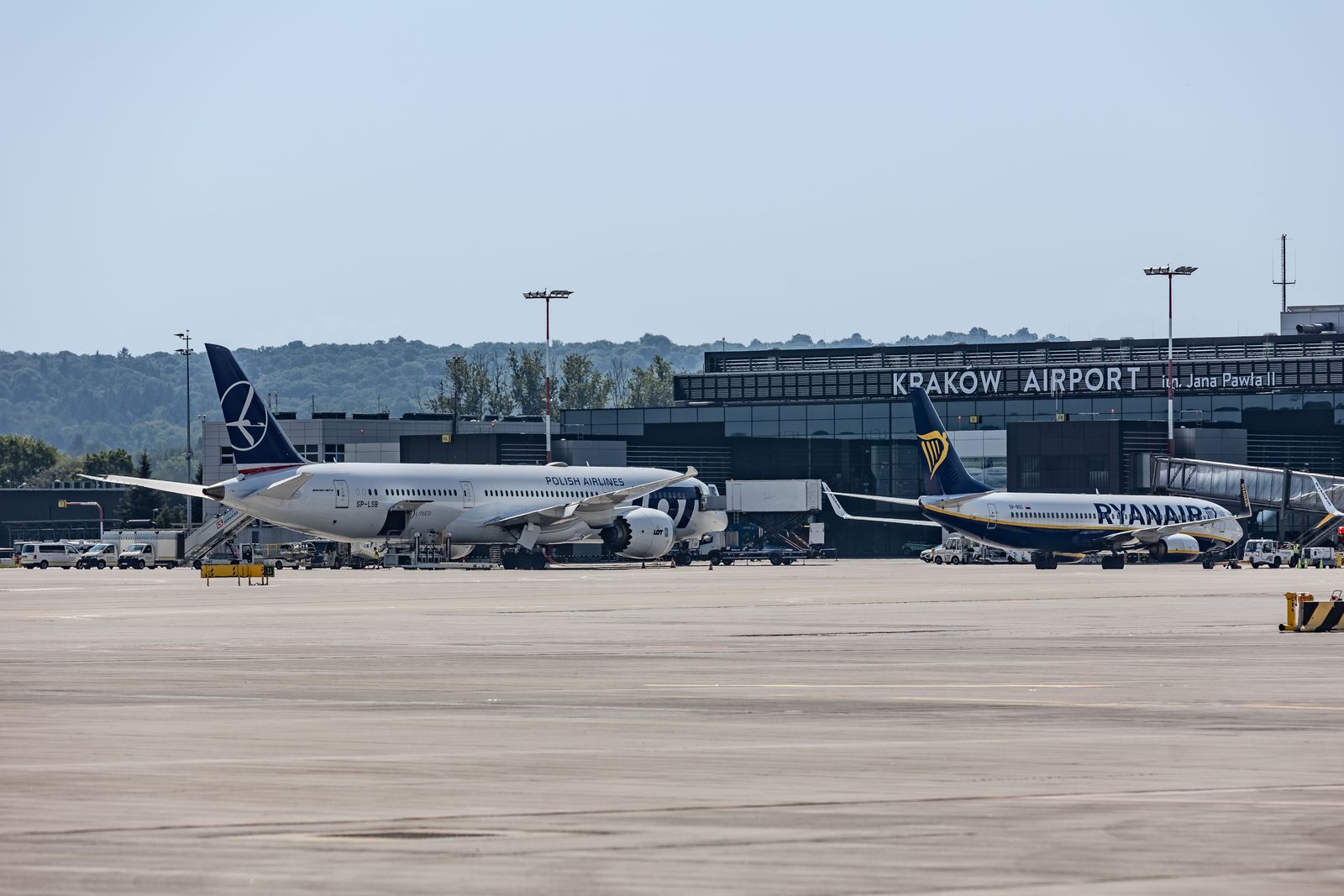
John Paul II Kraków Airport (IATA: KRK), located in Balice, 11 km west of Kraków, is the largest regional airport in Poland. It has been operating at this site since 1964 and has been breaking its own records for years in terms of both the number of flights and passengers served.
It is currently the second-largest airport in Poland, after Warsaw Chopin Airport (WAW), in terms of both passenger volume and the number of flight operations, with the difference that, unlike WAW, it does not serve as a transfer hub.
In 2012, the airport underwent a reconstruction of its taxiways, and construction began on a new passenger terminal and a hotel adjacent to the airport. Nearly 10 million people live within a 100-kilometer radius of the airport, which is the highest figure in the country.
The annual growth rate of passenger numbers in Kraków currently stands at +16%; this strong growth has placed Kraków Airport among the five fastest-growing major airports in Europe (those handling between 10 and 25 million passengers annually). In the ACI EUROPE ranking, Kraków Airport took second place in the European Union, trailing only Malta International Airport by a mere 0.5 percentage points.
“In June 2026, Kraków Airport handled 1,374,235 passengers, and since the beginning of the year, the airport has already handled 6,966,238 passengers; we estimate that in July and August we could handle up to 3 million passengers,” — said Łukasz Strutyński, CEO of Kraków Airport.
Such high passenger interest in flights from Kraków poses a challenge for airport authorities.
In an interview with CONNECT Case Study, CEO Strutyński spoke in greater detail about the phenomenon behind Kraków Airport’s success.
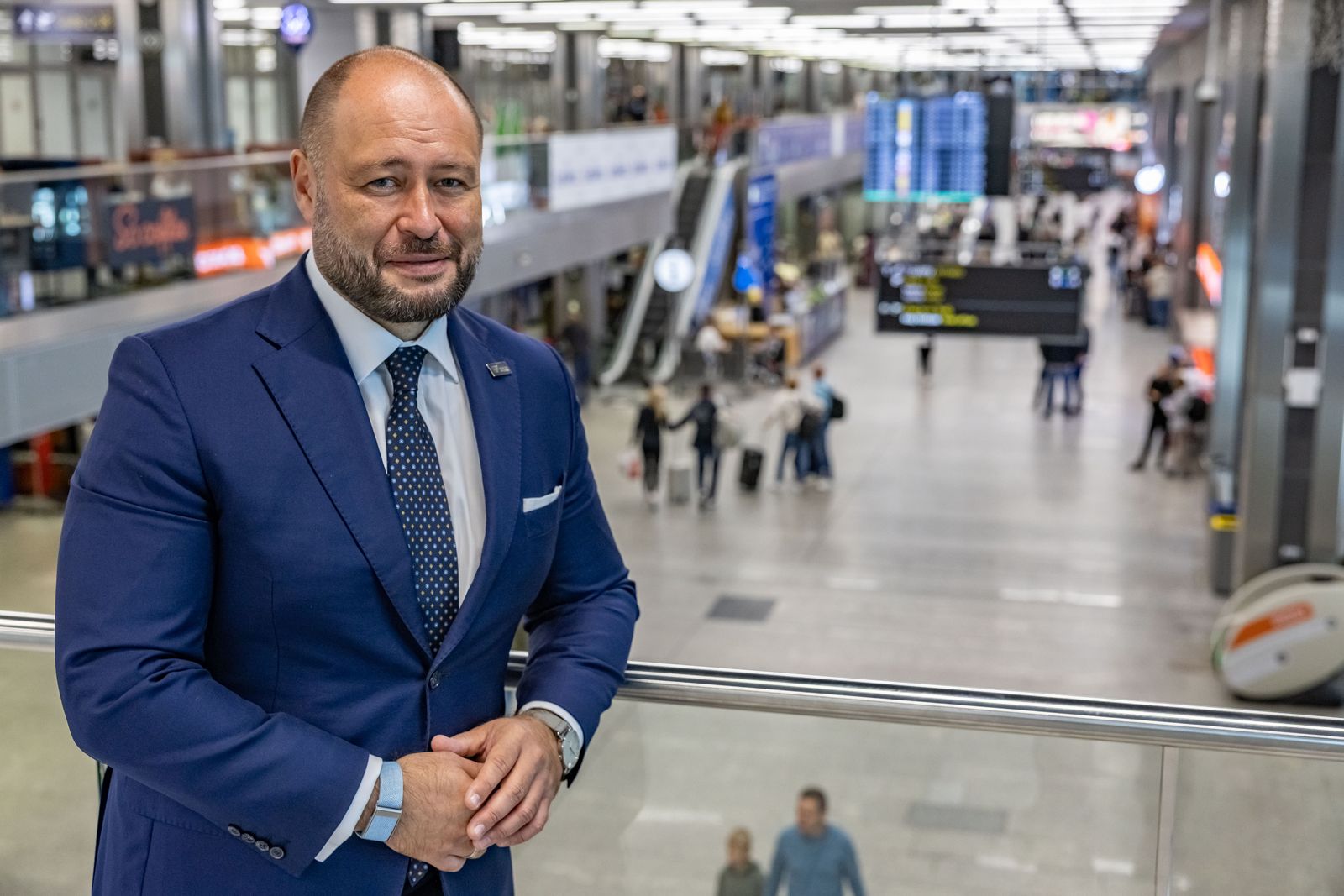
Last year, there was a lot of talk about the need to open a temporary terminal for passengers traveling outside the Schengen Area due to the insufficient capacity of the existing infrastructure. This was ultimately achieved by converting the former cargo terminal. Are you satisfied with the results? To what extent is the new space currently sufficient, given that the summer season has already begun?
We are pleased to see the results of the Support Terminal’s operation, which is already playing a significant role in efficiently handling the growing passenger traffic.
Thanks to the launch of the Support Terminal, the departure area’s capacity has increased from 1,820 to 2,700 departing passengers per hour. The investment has also significantly increased the space available to travelers, enabling the creation of new retail and dining outlets as well as additional restroom facilities. This has resulted in improved passenger comfort and reduced crowding in key areas of the terminal.
Since the Support Terminal opened, it has already served over 162,000 departing passengers.
The new section of the terminal offers 632 seats, most of which are equipped with a total of 380 universal electrical outlets for charging mobile devices. With various passenger groups in mind, the facility also features a medical office, a comfort area for people with disabilities and their caregivers, a room for parents with children, a play area for the youngest passengers, and a storage area for airport strollers.
To accommodate the needs of travelers from diverse cultural backgrounds, foot-washing stations have been installed in the ground-floor restrooms, which are particularly important for passengers from the Middle East. The terminal is also equipped with drinking fountains and an outdoor smoking area.
Another new feature at Kraków Airport is two ecumenical prayer rooms — separate ones for women and men — as well as a specially designed quiet room for neurodiverse individuals, providing a peaceful and comfortable environment while waiting for a flight.
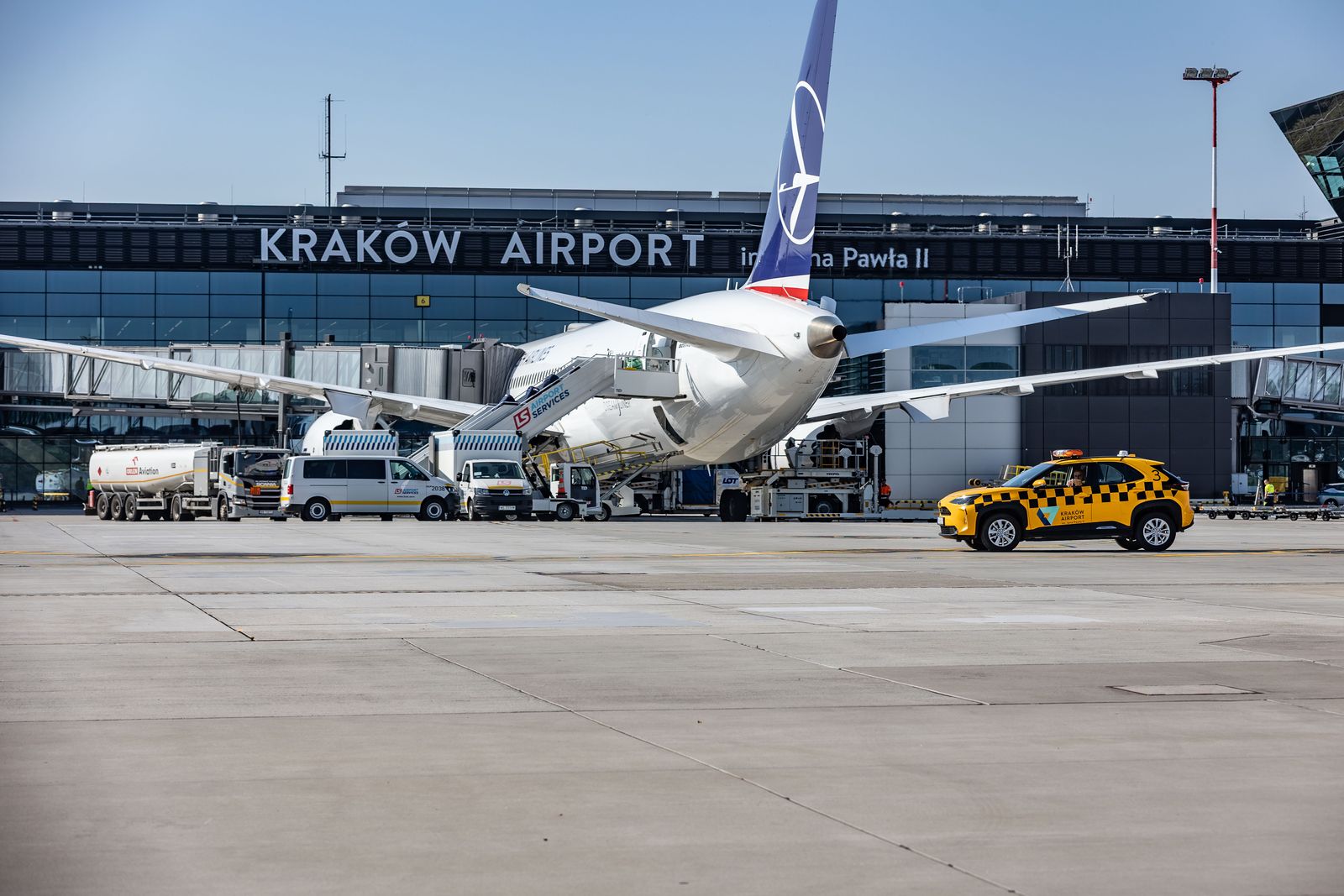
Kraków Airport ended 2025 with 13 million passengers. What are the forecasts for 2026?
Kraków Airport continues to see dynamic growth in passenger traffic in 2026. Since the beginning of the year, the airport has already served over 6,966,238 passengers.
According to current projections, Kraków Airport will handle 1,448,735 passengers in July, including 1,405,341 on scheduled flights and 43,394 on charter flights. An even better result is expected in August, when the number of travelers is projected to reach 1,482,121, of whom 1,441,320 will travel on scheduled flights and 40,801 on charter flights.
The sustained high growth rate suggests that by the end of the year, the number of passengers served could reach approximately 15 million, which would be another record in the history of Kraków Airport.
The first half of the year was quite challenging for Kraków Airport — as it was for many other airports — due to flight cancellations by Middle Eastern carriers. This segment is of great importance to Kraków, as Kraków Airport is the national and regional leader in terms of the number of carriers and destinations offered to the Middle East. Etihad Airways has already launched its first flights to Kraków. To what extent is the return of carriers and routes from the Persian Gulf region affecting the airport’s performance?
Due to the conflict in the Middle East, Kraków Airport recorded a decline in traffic of 119,645 passengers. Despite these challenges, most carriers serving destinations in this region have gradually resumed operations, albeit sometimes on a limited basis. On the other hand, we are seeing an increase in service on some routes. Airlines are closely monitoring the geopolitical situation and adjusting their schedules and offerings to current operational conditions and security requirements.
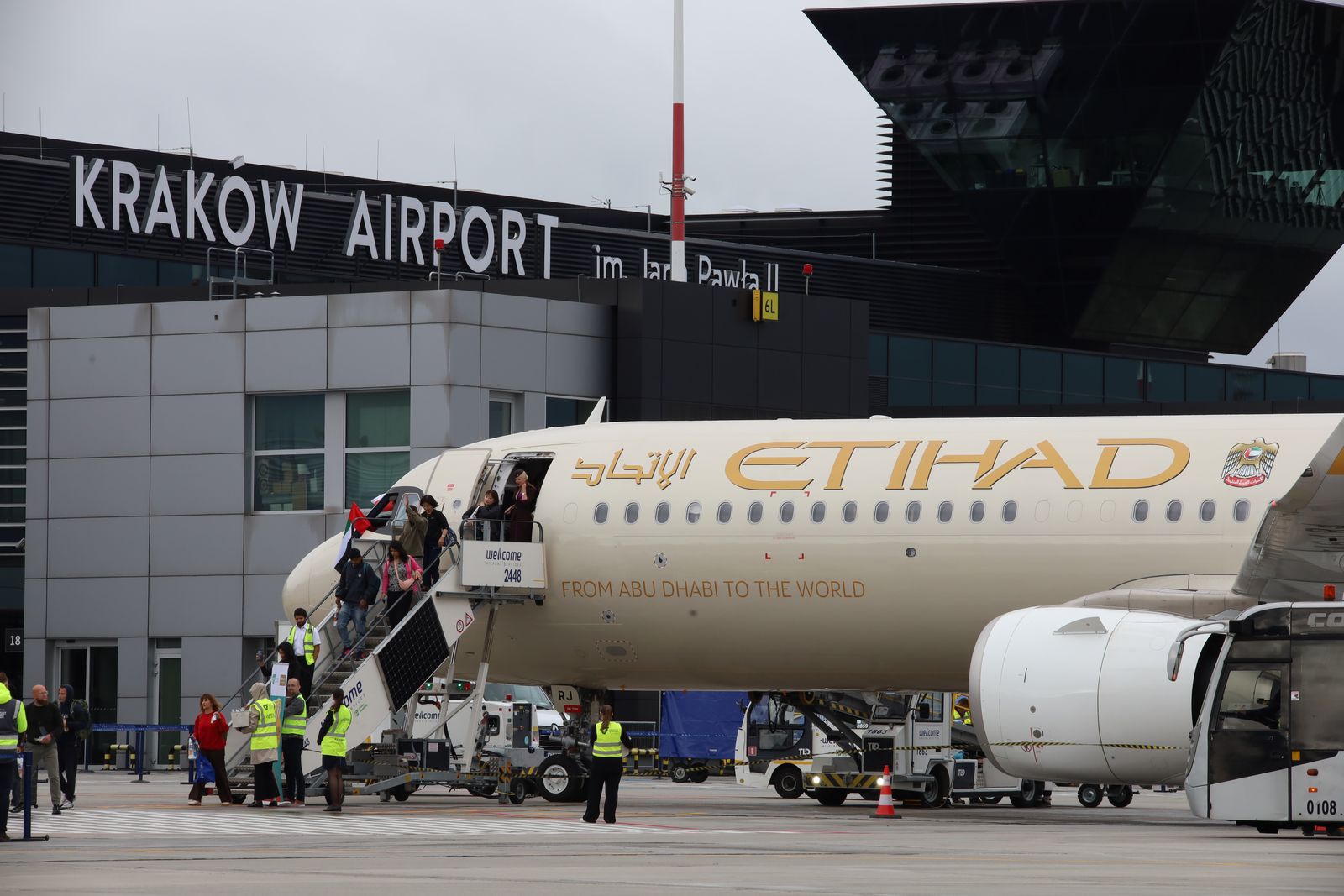
We are particularly pleased with the presence of Etihad Airways, which launched a new seasonal route between Abu Dhabi and Kraków on June 11. Flights operate four times a week on the carrier’s newest aircraft — the Airbus A321LR. This is a significant strengthening of Kraków Airport’s route network and another step in the development of connections with the Arabian Peninsula.
The new route provides travelers from southern Poland with better access to destinations in the Persian Gulf region, Asia, and Australia, while also opening Kraków and the Lesser Poland region to new visitors from the Middle East. It also marks the first opportunity for passengers departing from Kraków to take advantage of the airline’s extensive route network, as well as Etihad Airways’ renowned First Class.
The Airbus A321LR can carry 160 passengers in First, Business, and Economy classes. The aircraft is equipped with two private First Suite cabins with sliding doors and 14 Business Class seats, each providing direct aisle access.
The current terminal was designed to handle up to 8 million passengers per year. The non-Schengen zone has already been expanded, but the Schengen zone – especially during the morning rush hour – still tends to get crowded. How is Kraków Airport handling this challenge? What are the next stages of the airport’s expansion, both in terms of the implementation schedule and funding sources?
At Kraków Airport, the summer travel season is already underway, and I believe we are well-prepared to handle a larger number of passengers thanks to a series of infrastructure and operational measures. One of the most important steps was the launch last September of modern CT scanners at security checkpoints. As a result, the screening time for a single passenger has been reduced from about 30 to 20 seconds, and the throughput of a single checkpoint has increased from 120 to 180 passengers per hour.
The airport is also finalizing plans to increase the number of security checkpoints to 16, including 13 stations in the central security area, two new Fast Track stations, and one in the VIP Terminal. Additionally, plans are in place to ensure 24-hour availability of the security checkpoints, which will allow for an even more efficient distribution of passenger traffic.
Another key element in increasing capacity was the expansion of the arrivals area through the launch of two new baggage carousels. As a result, their number has increased to six, and the capacity of this part of the terminal has risen from 16 to 18 flight operations per hour. At the same time, the number of passengers arriving from the Schengen area who can be processed per hour has increased from 2,200 to 2,700.
The implemented solutions are already improving passenger comfort and enabling the airport to efficiently handle growing passenger traffic, while also representing an important step in preparations for the terminal’s further expansion.
The expansion of Terminal T6, which is currently underway, is the largest infrastructure project in the history of our airport, with a net value of 537.7 million PLN. In just three years, we will open a modern, comfortable facility that will allow the airport to comfortably handle 16 million travelers annually, and upon completion of all phases of the project in 2032, as many as 20 million passengers. Eleven new gates, three new terminals with stairwells and access to jet bridges, 54 passport control booths and 20 ABC gates, a shopping and dining area, and new departure lounges — during the project’s implementation, modern and innovative technological solutions will be utilized to provide passengers with an even higher level of comfort and safety, as well as more efficient service at every stage of their journey, including for passengers with disabilities.
In light of this rapidly growing air traffic, we have begun relocating our offices to a new location away from the airport apron. Design work on this building is currently underway. We want to free up valuable space and begin preparations for the construction of the next terminal right away. This is because we must develop our infrastructure in advance, taking into account the growing needs of our passengers.
Frequent fog and the resulting flight cancellations and diversions are one of the biggest challenges for Kraków Airport during the winter. What is the current status of the work to implement a higher-category ILS system, which is intended to help mitigate this problem?
Fog at Kraków Airport is a serious problem for both passengers and airport staff. Currently, the Polish Air Navigation Services Agency, in cooperation with Kraków Airport, is replacing the “KRW” ILS/DME system, which has reached the end of its technical service life after 23 years of operation. Work began on May 4, 2026, and the new equipment is scheduled to go live on October 1, 2026.
The aforementioned equipment is capable of operating in both ILS Category I and Category II modes. Initially, it will operate in Category I. At the same time, Kraków Airport is preparing to obtain CAT II certification, which could be implemented in the first quarter of 2027. According to estimates, this would prevent as many as 80 percent of aircraft diversions caused by adverse weather conditions. Ultimately, once the new runway is completed, the airport will have an ILS Category III system.
Another important measure designed to facilitate flight operations during fog was the introduction of LVP (Low Visibility Procedures). What exactly is an LVP procedure, and what effects has its implementation had at Kraków Airport?
Preparations for implementing LVP (Low Visibility Procedures) begin when visibility on the runway drops below 800 meters and/or the cloud base falls below 300 feet (90 meters). Under such conditions, the airport switches to limited-visibility operations, which requires the implementation of a series of additional measures to ensure air traffic safety.
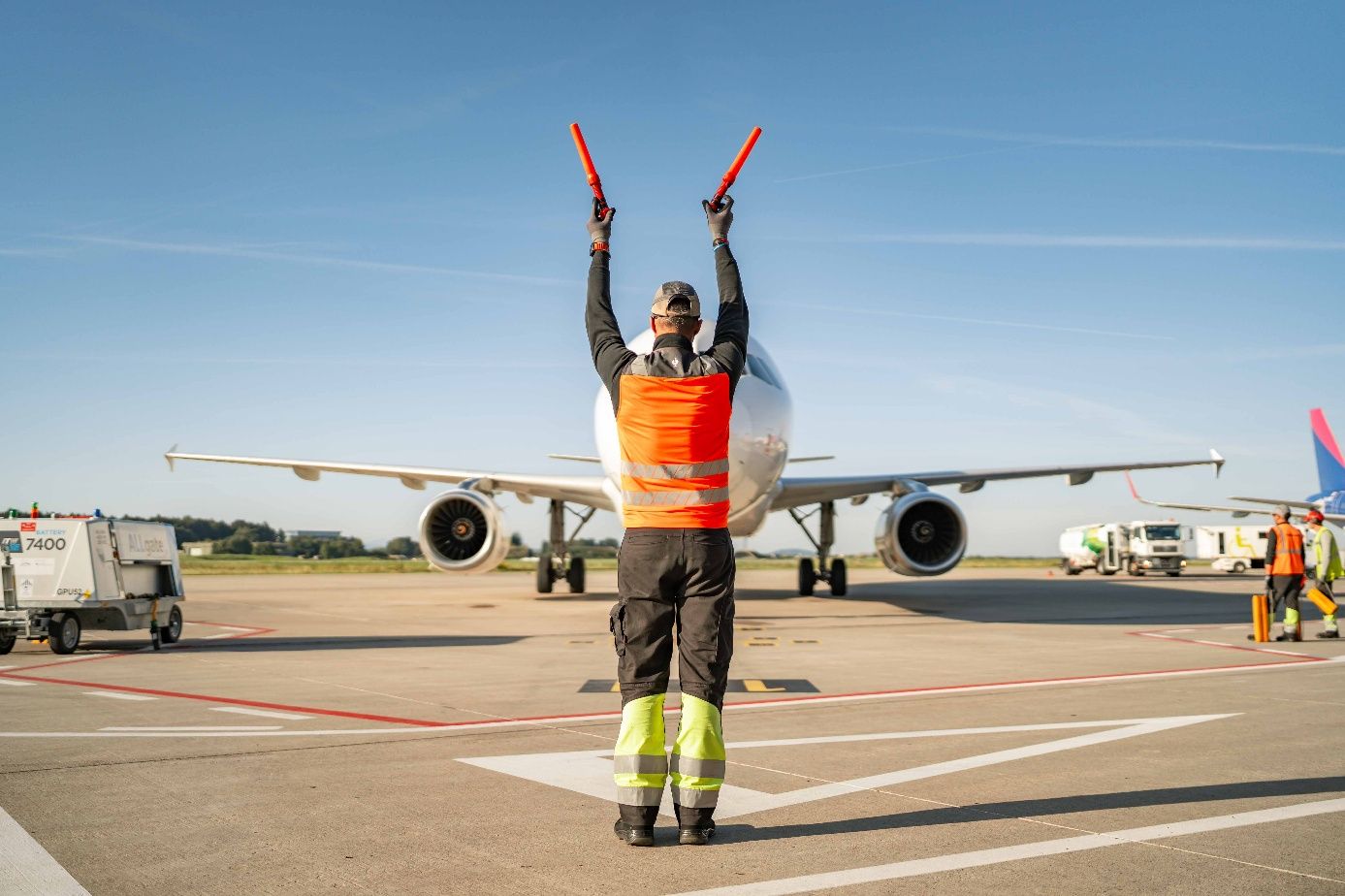
As part of the procedure, all work not directly related to aircraft handling on the apron and maneuvering area is suspended, and all persons and vehicles whose presence is not essential are removed from these areas. Detailed inspections of the runway surface condition and the functionality of the navigation lighting system are conducted. While the procedure is in effect, the intervals between flight operations are also increased.
In the second half of last year, thanks to cooperation with the Polish Air Navigation Services Agency, Kraków Airport implemented new LVP procedures, which significantly improved the airport’s operational capabilities during foggy conditions. Currently, landings can be performed with a visibility of at least 550 meters in the aircraft’s touchdown zone, whereas previously this requirement had to be met along the entire length of the runway. Meanwhile, the minimum visibility required for takeoff has been reduced from 550 to 350 meters.
Already after the first few months of implementing the modified procedure, we saw how significantly it contributed to maintaining the continuity of flight operations during foggy conditions. This is particularly evident when comparing December 2024 and December 2025. Although the airport operated under the LVP procedure for over 200 hours last year – compared to approximately 40 hours the year before – the percentage of canceled and diverted flights remained at a similar level.
An analysis of specific days demonstrates the scale of the benefits resulting from the new rules. Thanks to changes in the procedure, on December 2, 2025, it was possible to conduct 90 percent more flight operations than would have been possible previously. On December 4, the number of operations increased by 45 percent; on December 6, by 75 percent; and on December 8, by 80 percent. This confirms that the implemented measures have significantly increased the airport’s operational resilience in the face of adverse weather conditions.
In addition to the terminal expansion, Kraków Airport also welcomed a new duty-free operator – Baltona – which occupies the largest retail space. The airport now has its own mascot as well – just like the city of Kraków, it’s a little dragon. What other new features and amenities does the airport offer today from a passenger’s perspective?
At Kraków Airport, you can encounter as many as two unique dragons.
The Aviator Dragon is the 26th figure on Kraków’s Dragon Trail; it’s perched on a globe and holds a paper airplane in its paw – a symbol of travel, exploring the world, and dreams of flight. The dragon welcomes passengers visiting the airport and encourages them to explore Kraków in the footsteps of its most famous symbol. The second one you mentioned is the mascot called Krakuś – a friendly-looking aquamarine dragon whose name was chosen by passengers in a special vote. Krakuś has become the official mascot of Kraków Airport and a special ambassador for our youngest travelers.
Another nod to our city and region is the Kraków Duty Free by Baltona store – it offers travelers not only a wide selection of top-quality products, but its interiors are also inspired by the history and rich heritage of Kraków, highlighting the unique character of the city and the entire region.
Another new initiative launched during the summer vacation season is the project “Destination: Małopolska!”— an initiative by Kraków Airport carried out in cooperation with the counties of Małopolska, aimed at promoting the region’s tourist, cultural, and economic attractions. Thanks to the millions of passengers visiting the airport each year, Kraków Airport is becoming a natural gateway to Małopolska and a showcase for its greatest attractions.
The program enables, among other things, the promotion of counties within the passenger terminal, the display of local products, and the conduct of joint marketing activities encouraging travelers to discover the region’s diversity.

Credit Photo: Joanna Patej
Kraków Airport is likely the only airport in Poland with its own loyalty program. How exactly does this program work, and how popular is it? How many members does the Kraków Airport Loyalty Card currently have? Does the airport see specific benefits resulting from the program’s operation?
Kraków Airport Loyalty is the airport’s proprietary loyalty program, available to all passengers over the age of 18. Membership is free, and participants gain access to the Benefits Catalog based on their membership tier. The Benefits Catalog includes, among other things, discounts at shops, dining venues, Business Lounges, and various establishments, a special parking offer, and the opportunity to earn points for every outbound flight.
The program offers two tiers: Kraków Airport Loyalty and Kraków Airport Loyalty Prestige. Program participants start at the basic tier. By earning points for each outbound flight from Kraków, they can then redeem them for rewards or upgrade to the next tier of the program, i.e., Prestige (to qualify for a KAL Prestige card, members must have completed and registered 18 outbound flights within 12 months). A higher membership tier offers a wider range of benefits and greater discounts.
Currently, the program has over 25,000 active participants, and this number is steadily growing. We are constantly developing this program, including by inviting new partners to join.