


Case Study: Memmingen Airport
The Managing Director of Flughafen Memmingen GmbH, Marcel Schütz replied to CONNECT questions about the airport and its current development.
It may come as a surprise to some, but the best airport for exploring attractions such as— Legoland Germany, the Neuschwanstein Castle, the German Alps – is Memmingen Airport.
Memmingen Airport traces its origins back to 1935, when it was established as a military airfield. Following World War II, it became a US Air Force base in 1956 before being transferred to the German Air Force in 1959 as Jagdbombergeschwader 34 “Allgäu”.
Following the closure of the military airfield in 2003, Allgäu Airport GmbH & Co. KG took over the site, marking the beginning of a new chapter for what is now Bavaria’s third commercial airport.
Today, FMM is a fast-growing, modern airport with a 2,981-metre runway and a well-developed passenger infrastructure. Its terminal features 11 check-in counters, 11 departure gates and five security lanes, with capacity to handle up to six Boeing 737 or Airbus A320/A321 aircraft simultaneously. Passenger traffic has grown from 750,000 in 2014 to almost 3.7 million in 2025.
Since 2017, Flughafen Memmingen GmbH has been responsible for the airport’s operations. The company is majority-owned by private regional entrepreneurs (62%), while the remaining 38% is held by Allgäu Airport GmbH & Co. KG, which brings together 88 regional companies and organisations.
The Managing Director of Flughafen Memmingen GmbH, Marcel Schütz replied to CONNECT questions about the airport and its current development.

Memmingen is the third-largest airport in Bavaria and the tenth largest in Germany. Some low cost carriers and their passengers view it as an alternative to Munich Airport. How do you position yourselves? Does the proximity to MUC help you, or is it a disadvantage?
Memmingen Airport covers a catchment area of 11.3 million people in 120 min drive. This includes not only the Munich Metropolitan Area, but Stuttgart and Zurich as well. Memmingen is already the airport with leading costs and fees in Southern Germany and has the goal to become leading in cost in Germany – “Germanys leading low-cost airport”.
This is exactly what we focus on, having an attractive cost base between the three high-cost airports of MUC, STR and ZRH – but never become a five star airport (like Motel One or Lidl) and having a attractive price airline and destination portfolio for passengers. Furthermore, the advantage of the city of Munich being between the two airports of MUC and FMM (opposite geographical direction) is an advantage compared to other secondary airports in Germany (i.e. FRA and HHN (Frankfurt Hahn Airport) are the same direction from Frankfurt, HAM and LBC (Lübeck Blankensee Airport) are the same direction of Hamburg).
Memmingen has established itself as a reliable and cost-efficient alternative in Southern Germany, which is also reflected in its continued passenger growth and strong positioning among the ten largest airports in the country.
The ownership structure of FMM is quite unusual, as 62% of the shares are held by local shareholders—representatives of major local businesses, including the seven largest local companies. What accounts for this? How does your airport contribute positively to the local business community?
Memmingen Airport is owned and operated by over 90 shareholders of the region, making it a unique crowd funding project by local companies. Over 90 % are owned privately. This spirit transfers into the airport, making a business case of a public infrastructure, deciding on the basis of opportunities and not desires.
Furthermore, FMM used to be a former military airfield and it was obvious that the closure would affect local wealth. Securing the airport, local jobs and regional income makes the area more attractive to international talent. In addition, workforce travelling through FMM helps the region to avoid the under coverage of experts, especially in tourism and health sectors. The Allgäu being Germany’s largest tourism region has an additional benefit of incoming traffic. Today, the airport also acts as an important mobility hub for employees and international talent, supporting regional industries by improving accessibility and helping to mitigate shortages of skilled workers.
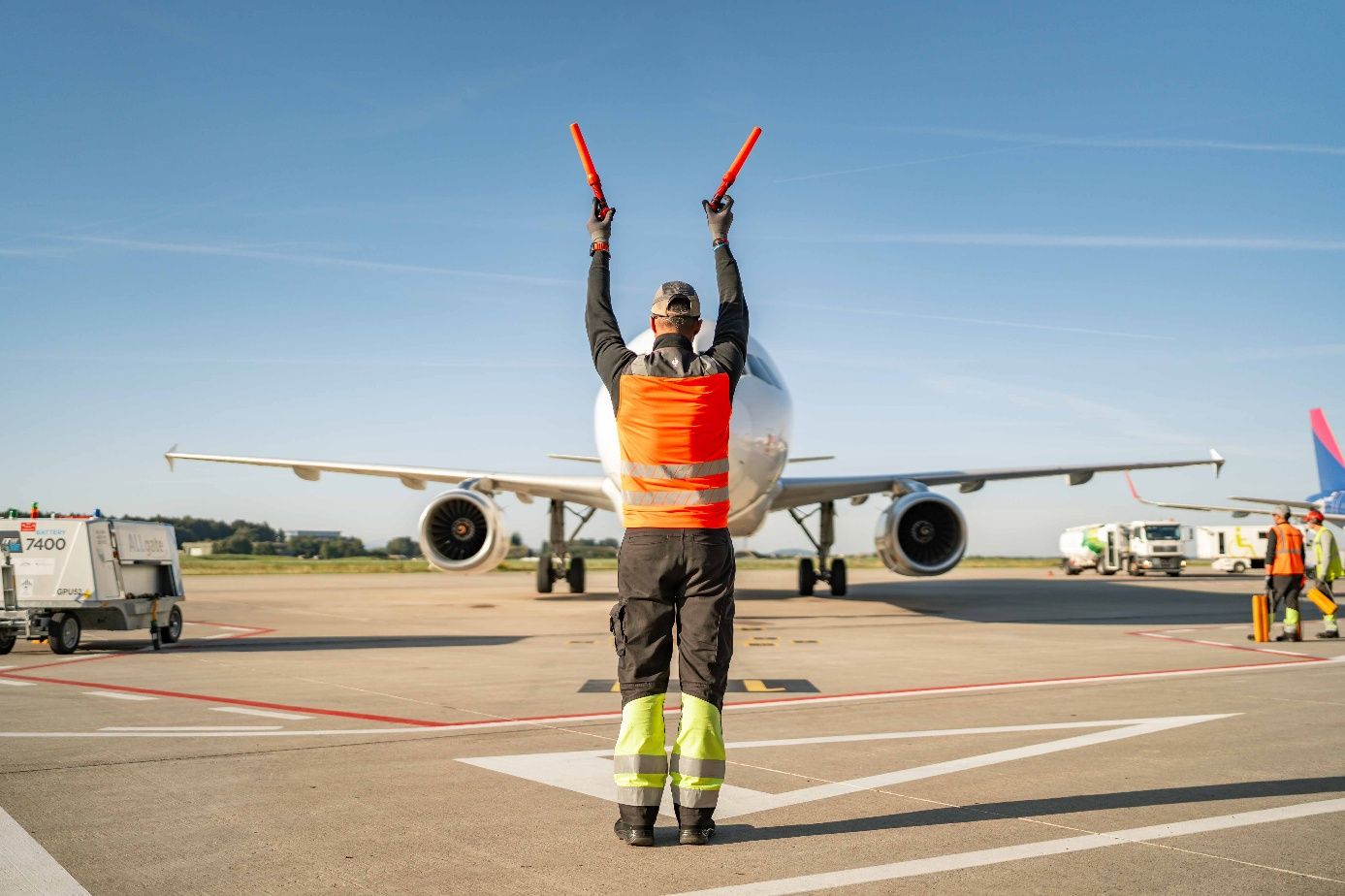
What are your development priorities today—are its further expansion of the route network based on the current Ryanair base and Wizzair connections, or attracting new carriers? Or perhaps further development of charter flights?
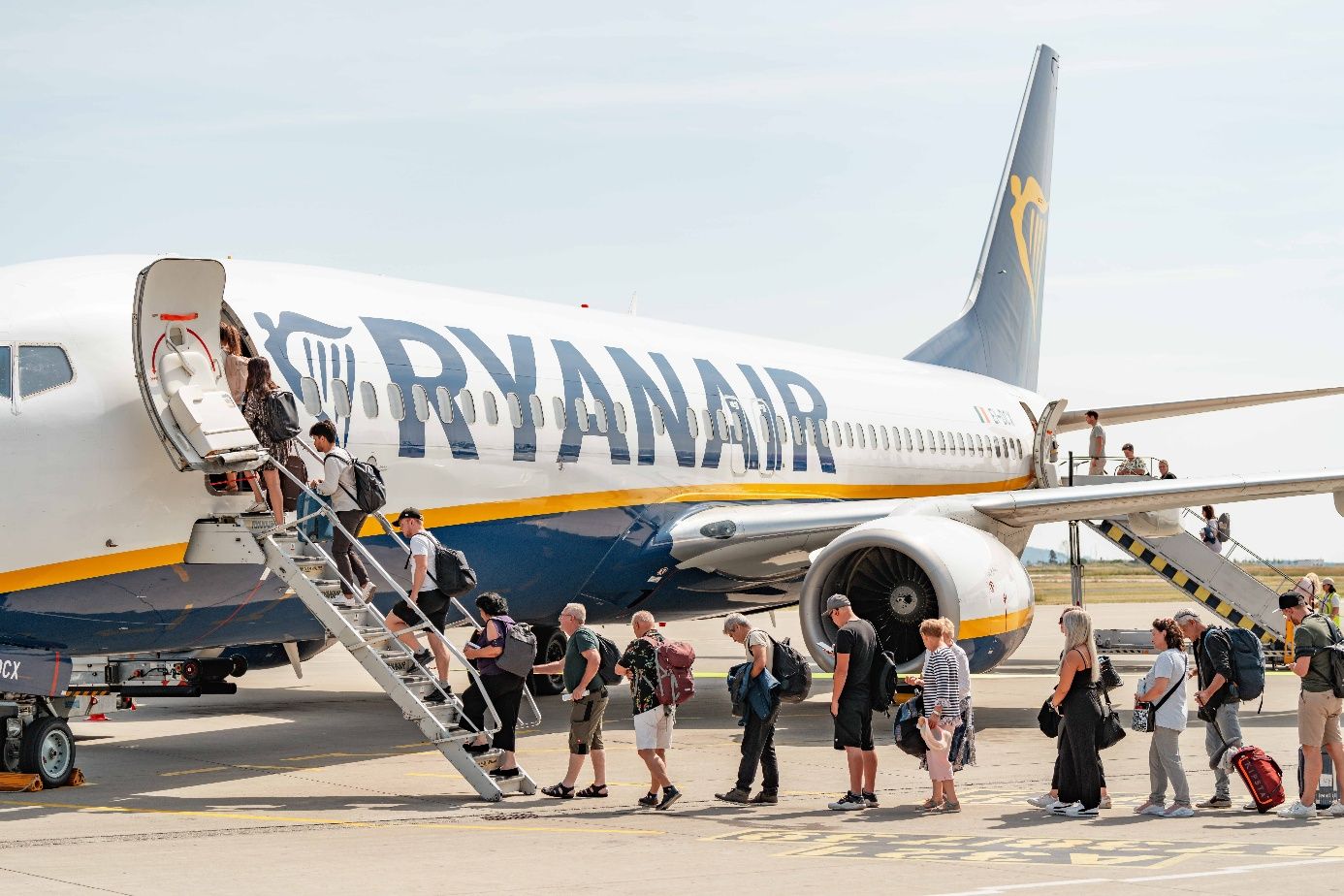
Ryanair and Wizz Air are two strong brands and leading companies in the European aviation industry. Having the biggest players in your portfolio is in general a very positive fact. We want to participate in their growth plans and increase our non-aeronautical revenues. This is why we want and need to invest in passenger facilities.
Diversification and risk management are or course additional important goals, that we focus on. Bilateral traffic rights are restraining us from some new potential destinations but also offer low risk opportunities for additional airlines in expanding our network. White gaps are for example Turkey and Egypt.
The airport already offers a broad portfolio of destinations and steadily expanding network, with continuous additions to the route map in recent years, underlining the importance of both organic growth with existing airlines and selective expansion into new markets.
For several years now, the airport has had a new, extended runway and a modern passenger terminal. Further expansion and an ILS CAT III system are planned. What are FMM’s priorities regarding the airport’s infrastructure and ground transport accessibility?
Landside connectivity is given with highway access in all directions, a train station transfer (10 min) gives you highspeed train access to Zurich and Munich, coaches run to Stuttgart, UIm, Munich and other destinations frequently. Airside infrastructure development is ongoing. New aircraft stands are build at the moment. Additional infrastructure for CAT 3 is deployed to go live within the next 12 months. Due to EASA regulations, a new fire department is currently under planning. The main focus is a terminal and car park expansion.
Your route network is strongly focused on Southeast Europe, with additional connections to Western and Northern Europe. What has shaped this network, and where do you see the biggest opportunities for future growth?
These markets have historic relations. History in general plays a big role in VFR traffic. In example wars and refugees that link countries and people (Balkans) as well as movements of whole ethnic groups (Donauschwaben). For this reason we see additional VFR markets out of Memmingen like Turkey, Syria in future or also Kazakhstan. The Northern destinations and the UK are more tourism inbound driven, a segment that has to be developed step by step in cooperation with local tourism authorities, even they stay reserved for internationalization. Poland and the Baltics are additional white gaps that can be closed in future.
FMM welcomed more than 3.6 million passengers in 2025. What are the airport’s main passenger segments, and what attracts visitors to the Allgäu region and southern Bavaria?
Passengers are touristic and VFR driven with only a one-digit percentage on business travelers. Destinations for inbound tourism are very differentiated. In winter Austrians ski resorts are very attractive as main resorts like St. Anton or Lech are reachable within 2 hours. In September / October the main attraction is the Oktoberfest in Munich.
City trips to Munich are in general very popular.
But i.e. Legoland Germany, the Neuschwanstein Castle, the German Alps and many more destinations are within easy reach of Memmingen including some of the most visited attractions of Germany.